
A portfolio mortgage is a loan that a lender originates and keeps on its own books instead of selling it on the secondary market. Because the lender holds the risk, it sets its own underwriting rules, which can open a path for borrowers whose property or income does not fit a standard conventional loan. The trade-off is that terms, rates and fees vary much more from one lender to the next.
This guide explains how a portfolio home loan works, how it differs from a conventional mortgage, who tends to qualify, and what to compare before you accept an offer.
TL;DR
- A portfolio mortgage is a loan the lender keeps rather than selling to Fannie Mae or Freddie Mac, so the lender writes its own rules.
- That flexibility can help with unusual properties, self-employed income, several mortgaged properties or larger loan amounts.
- Rates and fees are generally higher than on conventional loans, and each portfolio lender prices differently.
- Portfolio lending is one tool among several. Non-QM, DSCR, bank statement and jumbo programs can solve similar problems.
- Compare offers on rate, fees, loan structure, prepayment terms and what happens at the end of any fixed period.
Table of Contents
- What a portfolio mortgage is
- How it differs from a conventional mortgage
- Portfolio loans and the qualified mortgage rules
- Who may qualify
- Rates, fees and loan structures
- Portfolio loan, non-QM loan and blanket loan: the differences
- Where a portfolio mortgage fits
- How to compare a portfolio offer with other financing
- Our perspective
- Talk to us about your scenario
- FAQ
- Sources
What a portfolio mortgage is
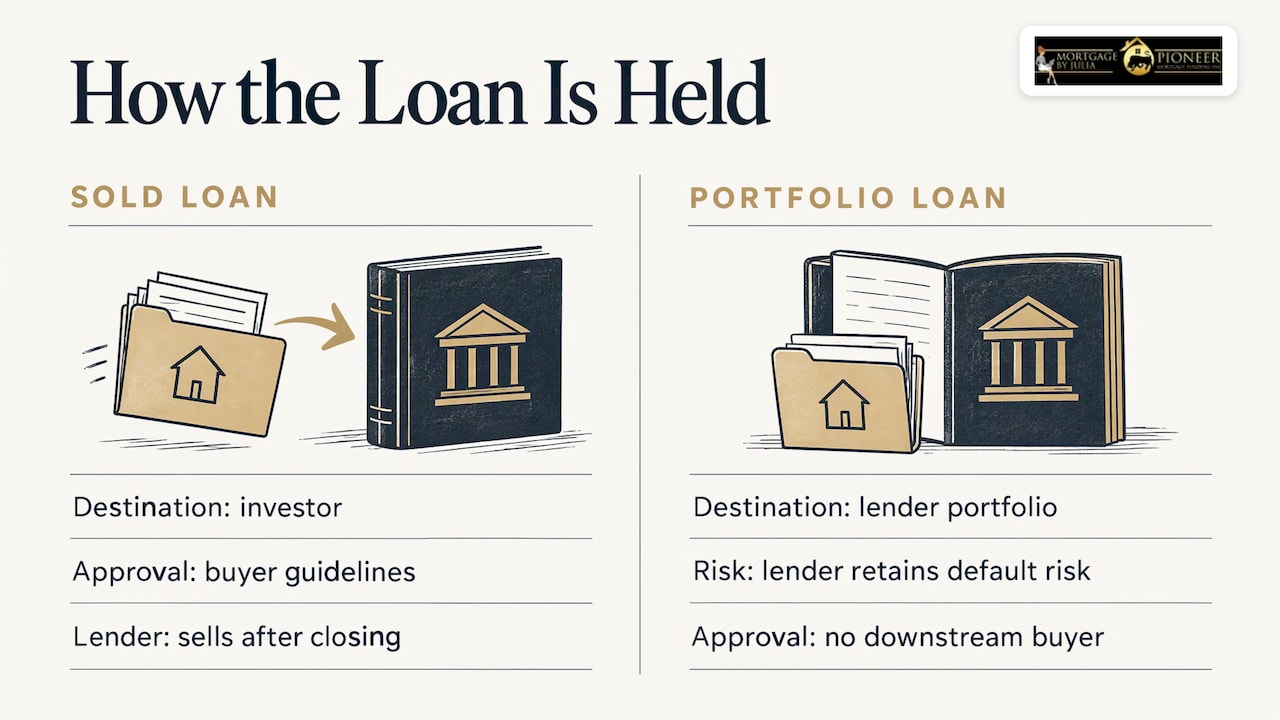
Most U.S. home loans are sold after closing. The lender funds the loan, then sells it to an investor, often Fannie Mae or Freddie Mac, and uses the proceeds to make the next loan. To be sold this way, the loan must follow the buyer’s guidelines.
A portfolio mortgage skips that step. The lender keeps the loan in its own portfolio, so it keeps the default risk too. Portfolio lenders are typically banks, credit unions, niche lenders and other investors. Since nobody downstream has to approve the loan, the lender can be more creative about who it lends to and on what terms.
The terms “portfolio mortgage,” “portfolio loan,” “portfolio home loan” and “portfolio lender mortgage” all describe the same thing: the loan is defined by where it ends up, not by the type of borrower or property.
How it differs from a conventional mortgage
The key difference is what happens after closing. Lenders typically sell eligible conventional loans in the secondary market but keep portfolio mortgages in-house. Portfolio loans are non-conforming, meaning they do not meet the criteria for resale to Fannie Mae and Freddie Mac.
| Feature | Conventional (conforming) loan | Portfolio mortgage |
|---|---|---|
| After closing | Usually sold to an investor | Kept by the originating lender |
| Underwriting rules | Set by secondary market guidelines | Set by the lender |
| Review style | Often automated, with fixed ratios | Often manual, looking at the whole financial picture |
| Loan amount | Limited by conforming loan limits | Set by the lender |
| Rates and fees | Generally lower | Generally higher to offset lender risk |
| Terms | Standardized | Varies by lender |
Because the lender carries more risk, it often raises interest rates and origination fees to compensate. That does not make a portfolio loan a poor choice. It means the loan should be compared on total cost against what it allows you to do.
Portfolio loans and the qualified mortgage rules
Portfolio loans sit in an interesting corner of federal mortgage regulation. According to U.S. News, because they are not sold into the secondary market, they are classified as non-QM loans, which means they are not subject to the CFPB’s limits on interest rates, fees, loan length and certain loan features. Lenders must still verify that you can repay the loan under the ability-to-repay rule.
Two regulatory points are worth knowing:
- Small creditors. In 2015, the 43% debt-to-income cap for Qualified Mortgage loans did not apply to portfolio loans made by small creditors, which gave those lenders extra underwriting room.
- Seasoned QM. The rule applies to applications received on or after March 1, 2021. It creates a pathway to safe harbor from ability-to-repay liability for eligible loans after a seasoning period of at least 36 months. The CFPB’s final rule describes the category as first-lien, fixed-rate loans held in portfolio by the originating creditor or first purchaser for at least 36 months, with performance, product-feature and underwriting requirements.
Policy attention is also growing. A March 2026 executive order directs federal agencies to consider revising capital rules so that risk weights for portfolio mortgages reflect the actual credit risk of the exposure. Whether that changes what lenders offer is something to watch, not something to count on.
Who may qualify
There is no single portfolio standard. Each lender decides its own minimum credit score, maximum debt-to-income ratio, down payment, loan size and repayment terms. In general, a portfolio lender may be a fit for these borrowers:
- Buyers of properties that conventional loans reject. Condos that fail agency project requirements are a common example, and so are homes in unusual condition. Portfolio lenders typically do not require a property to be in a particular condition, which can suit an investor buying an older home to renovate.
- Investors with many properties. The same source notes portfolio lenders typically do not restrict the number of properties an investor can purchase.
- Self-employed borrowers. Tax returns that show heavy write-offs can understate real income. A lender reviewing the whole picture can weigh that differently.
- Borrowers who need larger loans or non-standard terms. The lender decides the loan amount and repayment schedule.
- Borrowers with a recent credit event or a high ratio on paper. Flexibility here depends entirely on the lender.
Prospective buyers may find it easier to qualify because portfolio lenders do not have to meet secondary market guidelines. Easier is relative, though. Many lenders still want solid credit, meaningful equity or a larger down payment, and clear documentation.
What underwriting usually looks like
Portfolio underwriting is often manual rather than run through an automated engine. Expect to supply more than a standard file: recent pay stubs or profit-and-loss statements, tax returns, bank and asset statements, and, for investors, a schedule of the real estate you own. A clean, well-organized package shortens the process.
Rates, fees and loan structures
Portfolio loans generally carry higher interest rates and fees than conventional loans, because the lender holds the risk and cannot pass it on. How much higher depends on the lender, your credit, your down payment, the property and the loan structure, so any single published number is only a starting point. Our daily rate page shows where the broader market is moving, which helps you judge whether a portfolio quote is reasonable.
Structure matters as much as the rate. Portfolio products often differ from the familiar 30-year fixed:
- Adjustable rates. A fixed period followed by adjustments. Understand the index, margin, caps and first adjustment date. Our page on the adjustable-rate mortgage in Florida explains the mechanics.
- Balloon payments. A 10- or 15-year schedule with the remaining balance due at the end, which means a refinance or payoff later.
- Shorter full amortization. A 20- or 25-year term with higher monthly payments but no balloon.
- Prepayment terms. Some lenders charge a fee if you pay off or refinance early. Ask before you sign.
A lower rate with a balloon can cost more in practice if you cannot refinance when it comes due. Plan the exit before you take the loan.
Portfolio loan, non-QM loan and blanket loan: the differences
These terms overlap, and mixing them up leads to bad comparisons.
- Portfolio loan describes who holds the loan after closing: the originating lender.
- Non-QM loan describes how the loan is classified under the qualified mortgage rules. Many non-QM loans are sold to private investors rather than held, so a non-QM loan is not automatically a portfolio loan. Our guide to non-QM mortgage loans covers how they work and who qualifies.
- Blanket loan describes the collateral: one mortgage covering multiple properties, with one application, one closing and one monthly payment. Most blanket loans include a release clause that lets you sell one property without refinancing the whole loan.
An investor searching for a “portfolio mortgage” may actually want a blanket loan, or a loan priced on the property’s rental income. For rental properties, a DSCR loan qualifies the deal on its cash flow rather than your personal income, and investment property financing covers the broader set of options.
Where a portfolio mortgage fits
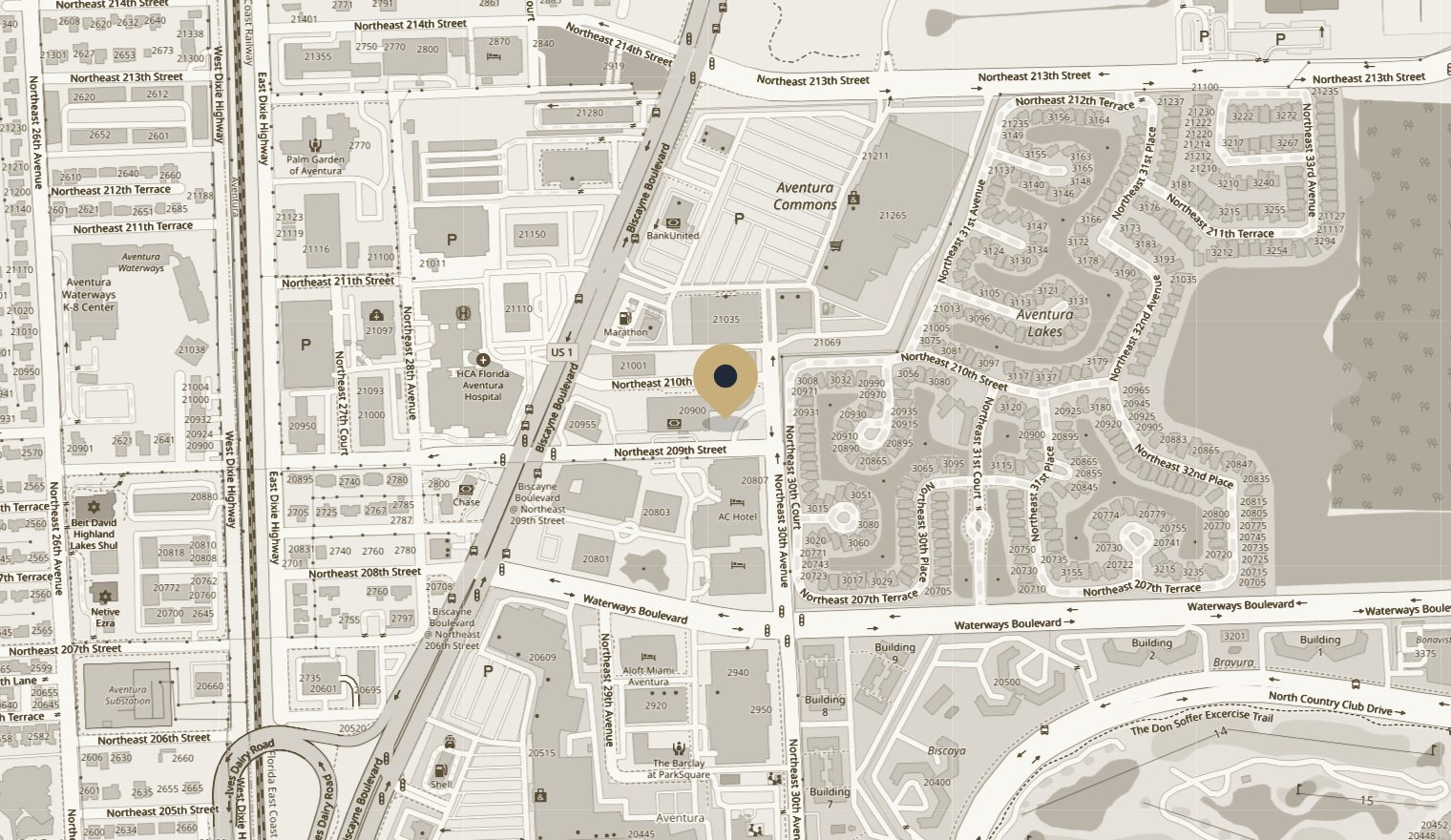
Non-warrantable condos. When a building has high investor concentration, pending litigation, thin reserves or other issues, agency-backed loans may not be available. A lender that keeps the loan can sometimes approve it where an agency-bound loan cannot.
Self-employed buyers. If your tax returns understate cash flow, a lender that evaluates the overall financial picture can help. Bank statement programs and asset depletion mortgages are related ways to document income without relying only on tax returns.
Investors adding properties. Conventional guidelines can stall once you hold several financed properties. Lender-held loans, DSCR loans and multifamily loans are all routes to keep growing.
Rehab and short-term projects. If the plan is to buy, renovate and sell or refinance, a fix and flip loan may match the timeline better than a long-term mortgage.
Larger loan amounts. Above conforming limits, a jumbo loan is the usual comparison point.
How to compare a portfolio offer with other financing
Because there is no standard portfolio product, the offer itself needs a careful read. Put each quote you receive side by side and compare:
- Total cost, not just the rate. Add origination fees, points, appraisal and legal costs, and any lender-specific charges. Ask for a Loan Estimate and compare the numbers line by line.
- Rate type and adjustment terms. For an ARM, note the fixed period, caps and index. For a fixed rate, confirm the term is truly fully fixed.
- Balloon or full amortization. If a balance comes due, know the date and how you will pay it.
- Prepayment penalty. Check whether it exists, how long it lasts and how it is calculated.
- Down payment and reserves. Lender-set requirements can be higher than conventional ones.
- Loan servicing. Portfolio lenders often service their own loans. Ask whether the loan can be sold later and what that would change for you.
- Documentation required. A longer document list means a longer timeline. Match it to your contract deadline.
- Alternatives priced against it. Compare with conventional, jumbo, non-QM and DSCR options for the same scenario.
That last step is where a broker helps. A single bank can offer only its own products. A broker with access to many lenders can price the same scenario across several programs, whether or not any of them are held in portfolio.
Our perspective
Borrowers rarely start by asking which program fits them. They start by hearing “no” from one lender and assuming the answer is the same everywhere. It is not. Lender guidelines differ, and the right match often depends on how a file is presented as much as on the file itself.
With more than 20 years in banking and finance and over $350 million in closed loans, we have seen how a condo, a self-employed income stream or an international buyer’s documents can look very different to different lenders. Our approach is to work with a broad range of lenders and match each client with the programs and terms that suit their situation, then explain the trade-offs in plain language.
If a lender-held structure is the right answer for your scenario, we want you to understand its rate, fees and exit before you commit. If a non-QM, DSCR, bank statement, jumbo or conventional loan fits better, we will show you that too. The goal is a loan you understand and can comfortably carry.
Julia Zhguleva
Talk to us about your scenario
We help homebuyers, homeowners refinancing, investors, self-employed borrowers and international clients across Aventura and throughout Florida. We compare programs from a broad range of lenders and walk you through each step, so you can see how a flexible-guideline loan stacks up against your other options.
Start with our mortgage loan programs, or reach out through Mortgage By Julia to talk through your purchase or refinance. To see how the process works from application to closing, read our step-by-step loan process.
FAQ
Is a portfolio mortgage the same as a non-QM loan?
Not exactly. A portfolio loan is one the lender keeps rather than sells, and because it is not sold to the agencies it is generally treated as non-QM. But many non-QM loans are sold to private investors instead of being held. The two terms overlap without being identical.
Which banks are portfolio lenders?
Portfolio lenders are typically banks, credit unions, niche lenders and other investors that keep loans on their balance sheets. Community banks and credit unions are common examples. Which ones offer portfolio home loans, and on what terms, changes by lender and by market, so ask each directly whether it holds loans in-house.
Are portfolio mortgage rates higher than conventional rates?
Generally yes. The lender keeps the risk, so it often increases rates and origination fees to offset it. The size of the premium depends on your credit, down payment, property and the lender. Compare the full cost of each quote, including fees, rather than the rate alone.
Can a portfolio loan finance more than one property?
A portfolio loan can cover one property or, as a blanket loan, several under one mortgage. Portfolio lenders also typically do not cap the number of properties an investor can buy. Terms vary, so confirm how a lender treats multiple properties and whether the loan includes a release clause.
Sources
- What Is a Portfolio Mortgage?
- What Is a Portfolio Lender? | U.S. News
- Understanding Portfolio Lenders: Benefits, Risks, and More
- FEDS Notes: Effects of the Ability to Repay and Qualified Mortgage Rules
- CFPB Issues Seasoned QM Rule
- Qualified Mortgage Definition under the Truth in Lending Act (Seasoned QM final rule)
- Federal Register, March 18, 2026
- Portfolio Loans: Finance Multiple Investment Properties